
In Gulf agriculture, a solar panel, pump or battery quotation is only one input. A project becomes reviewable when the farm service, water conditions, electrical design, operator responsibilities, commercial assumptions and evidence are connected.
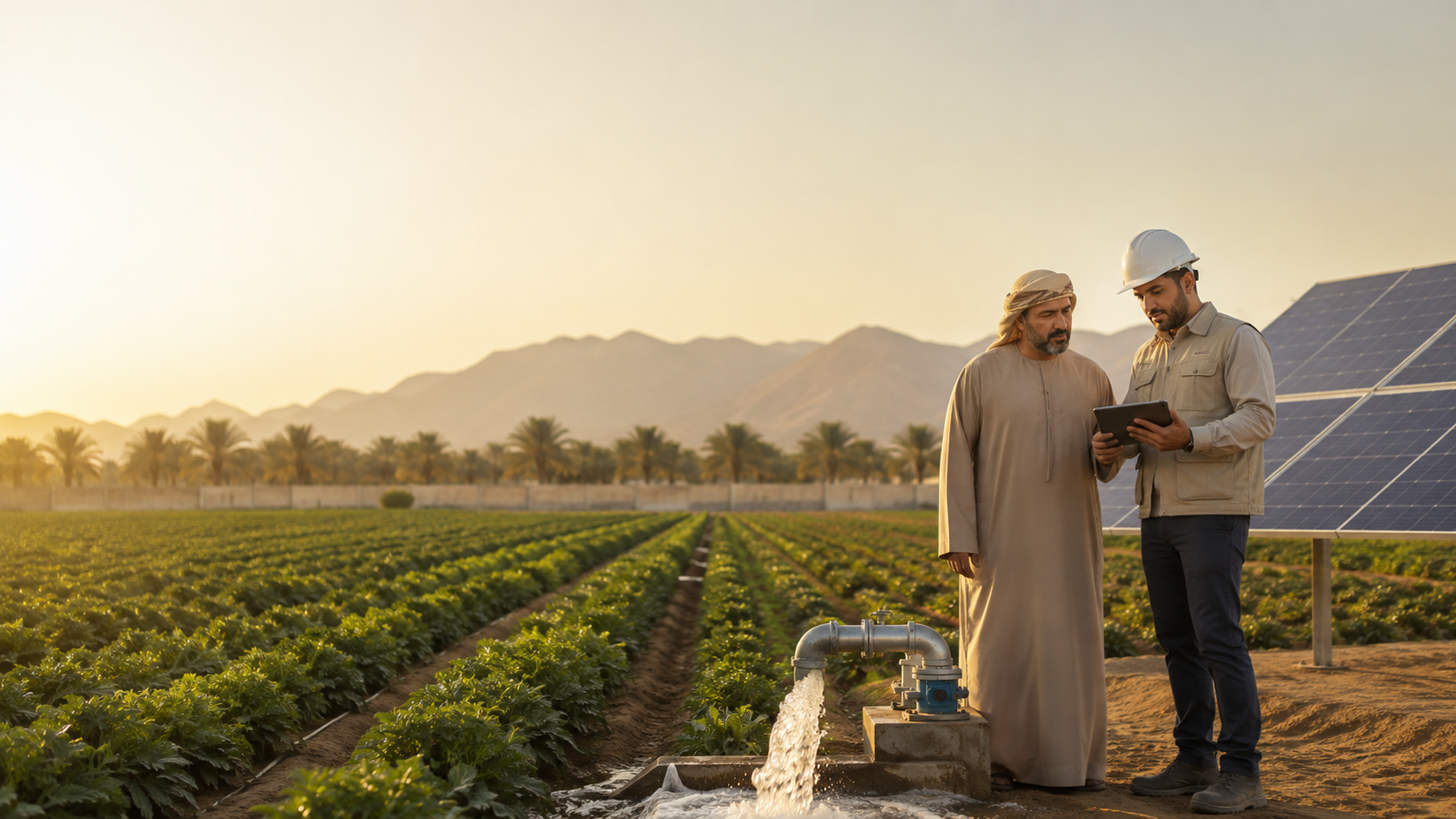
Begin with the agricultural service—not the equipment list
Define what the system must deliver: the irrigated area, crops, seasonal water requirement, operating hours, required flow and pressure, water source and existing infrastructure. This makes the need legible to farmers, EPC providers, pump specialists and finance teams before anyone compares brands or prices.
Build one technical and operating boundary
A useful readiness record connects solar resource assumptions with pumping head, pipe losses, pump curve, controls, storage strategy, grid or generator interaction, site access and planned maintenance. It also names the person responsible for daily operation and the evidence needed for commissioning. Final sizing still belongs with qualified engineers and local approvals.
Treat water, energy and food as one decision
FAO frames water, energy, food and ecosystems as interlinked systems, while IRENA places energy choices for irrigation at the centre of this nexus. Solar pumping can improve access to reliable energy, but lower marginal pumping costs can also increase pressure on water resources if abstraction and irrigation demand are not governed. Project readiness therefore includes water rights, sustainable yield, metering and operating rules—not only renewable-energy capacity.
The minimum review pack
- Farm, field and crop context with a verified location.
- Water source, depth, quality, permitted abstraction and seasonal availability.
- Daily and seasonal flow, pressure and irrigation schedule.
- Existing pump, grid, generator, storage and distribution assets.
- Site survey, load profile and transparent design assumptions.
- CAPEX, operating cost, currency, warranty and replacement assumptions.
- Named operator, maintenance route and response responsibilities.
- Commissioning tests, meter readings, photos and acceptance records.
Make the commercial route explicit
The farmer or project owner confirms the operating need and site facts. The technical provider owns design and performance assumptions. The financier reviews sponsor, cash-flow logic, security and risks. The operator owns daily records and maintenance. Clear ownership prevents a promising quotation from being mistaken for an executable project.
How CONSAI supports the pathway
CONSAI Agro & Energy OS can organize farm context, project requirements, provider discovery, structured RFQs, documentation and accountable follow-up in connected workflows. It supports screening and coordination; it does not certify water availability, replace an engineering design or guarantee financing.
Field Intelligence Workspace can structure field context, while Agro Energy OS and project discussions move suitable requirements toward controlled review.
Primary references
Project readiness connects the farm service, the resource boundary, the engineering assumptions, the responsible operator and the next commercial decision.